VOL. 54, NO. 2
Translating Narratives and Navigating Identities: Envisioning a Filmic Adaptation of Louise Erdrich’s The Sentence
Dilan Erteber
Approaching Louise Erdrich’s The Sentence as a hypothetical film project functions here as a critical diagnostic rather than a proposal. Because Erdrich has expressed no interest in adapting the novel, the point is not to imagine a production to pursue, but to examine what such a project would reveal about the current conditions of film culture. Thinking through the demands of adaptation brings into focus the structural tensions between the novel’s ethical world and the industry’s dominant practices. These include how intellectual property is optioned, how financing decisions are made, how production schedules prioritize speed over relationship-building, and how major studios continue to rely on entrenched systems of hiring and creative decision-making that systematically exclude Indigenous writers, directors, producers, and below-the-line workers. In other words, the very first steps required for an adaptation reveal how ill-suited the conventional development process is to Indigenous sovereignty and community accountability.
The speculative adaptation of The Sentence therefore becomes a way to reflect on what would need to change at multiple levels of film practice: Indigenous control over creative and editorial decisions; long-term, consent-based relationships with Ojibwe communities; production timelines that make space for consultation and refusal; financing structures that do not marginalize Indigenous producers; and distribution models that respect the cultural contexts from which the story emerges. Seen from this angle, the novel does not simply present compelling cinematic possibilities; it also illuminates the profound structural shifts required for a culturally grounded adaptation to be imaginable at all.
Adaptation is ubiquitous.1 Especially in Indigenous contexts, stories have been passed orally with the signatures of the storytellers, the land, and all other living entities. Fairly new, the academic discipline of adaptation lacks an Indigenous focus. In fact, The Routledge Companion to Global Literary Adaptation in the Twenty-First Century (2023) proves this gap by not focusing on any Indigenous story except for a brief mention in a chapter centering on borderland issues in the Latin American context. Analysis of major trends in Indigenous adaptation from novel to film, specifically focusing on the text-film pairs Whale Rider (2002) and Once Were Warriors (1995), enhances a thought-experiment for approaching a film adaptation of Louis Erdrich’s novel, The Sentence. This approach allows the analysis to expose how, even before thinking about mise-en-scène or narrative structure, the very premise of adapting an Indigenous text confronts the limits of prevailing film-industry norms that depend on extractive access to intellectual property, individualized creative authorship, accelerated development timelines, and market-driven aesthetic expectations that rarely align with the relational, place-based, and community-accountable ethics of Indigenous storytelling.
Positionally, this analysis acknowledges that Louise Erdrich has not expressed any intent to adapt The Sentence into a film. The discussion is therefore not an endorsement or initiation of such a project but an exercise in what adaptation scholarship can become when Indigenous priorities shape the frame. The novel is mobilized as a diagnostic device for examining how industry habits—rooted in settler logics of access, ownership, and marketability—have historically reconfigured Indigenous stories without Indigenous-led authority. In taking up The Sentence, the analysis draws from established patterns in Indigenous film production, consultation practices, and cross-media storytelling to demonstrate what an accountable, sovereignty-respecting adaptation conversation might look like. It resists the lure of speculative fandom and instead treats the hypothetical as a critical vantage point, one from which to lay bare the mechanics of consent, authorship, and intellectual authority. In this way, the piece performs the very intervention it argues for: showing that adaptation can be a site of refusal as much as creation, and that refusal itself can be generative when it clarifies the terms under which Indigenous stories move—or choose not to move—into other media.
Indigenous film is created by and with Indigenous people, not just about them. This distinction goes beyond identifying who is Indigenous; it also addresses how the work is produced. Indigenous filmmaking is not just about following a checklist of do’s and don’ts but requires thoughtful consideration of concerns connected to the community. While consultation and respecting cultural integrity are crucial, they are not the entirety of the process. In fact, consultation should not be viewed as a formality but as an organic, evolving practice. As soon as a filmmaker enters a community to shoot a film or listen to people’s stories, the choices in the filmmaking process naturally evolve to reflect the community’s input and cultural context. This is very different from dominant industry practice, where consultation is often compressed into short pre-production periods or outsourced to advisory roles that do not shape the creative core of the project. A sovereignty-aligned adaptation would require a reorganization of production culture that includes longer timelines, community-led decision-making, and relational accountability that shapes budget lines, production design, and distribution strategies.
Indigenous cinema is based on storytelling practices and necessitates an understanding of film as a collective meaning-making process in relation to Indigenous ontologies, epistemologies, and axiologies. Within a global context, media scholar Emiel Martens highlights Kristin Dowell’s assertion that Indigenous media is
a practice that simultaneously alters the visual landscape of mainstream media by representing Indigenous faces, histories, and experiences onscreen, while serving a crucial role offscreen to provide a practice through which new forms of Indigenous solidarity, identity, and community are created. (3)
This dual function emphasizes the transformative power of Indigenous media, both in reshaping dominant media narratives and fostering connections and collectivity among Indigenous peoples. Moreover, these media often address issues seldom covered by mainstream outlets, such as relationality, which encompasses humility, trust, reciprocity, and adaptability. In this regard, Indigenous cinema is inherently multi-layered, reflecting the complexity and depth of the cultural and social issues it seeks to address. The contrast with Hollywood’s extractive tendencies, such as one-off access to communities or adaptations of Indigenous stories without long-term relational commitments, illustrates the structural gap that adaptation scholarship must confront when working with Indigenous texts.
For the study of Indigenous cinema, it is imperative to address the following questions: Who is narrating the stories? To whom are these stories being told? Why are these stories shared? And how are these narratives presented? The positionality of the filmmaker often informs many of these considerations. Given Hollywood’s history of portraying Indigenous people in ways detached from identity, rendered invisible, or presented as stereotypes, a cinematic approach that celebrates Indigeneity is especially valuable. Possessing cultural familiarity and sharing narratives rooted in personal/communal experience can potentially result in more authentic and grounded cinematic works.
While adaptation is a widely recognized concept, its nuances are often underexplored within Indigenous narratives. Concerns about misrepresentation and oversimplification, which are inherent to adaptation processes, become even more pronounced in the context of Indigenous storytelling. Adapting an Indigenous text into a film, therefore, requires a profound sensitivity to a cultural context, involving considerations such as the land, language, historical and contemporary issues, the inclusion of an Indigenous cast and crew, and genuine engagement with the community. These community considerations must occur alongside the longstanding debates about fidelity, which have historically sparked controversies between authors and film directors. Early discussions of adaptation often centered around fidelity, turning it into a competition between forms, authors, and directors. As these debates evolved, scholars engaged in intermediality discussions, questioning which medium could be deemed ‘higher,’ referencing medium-specific qualities (see Lessing). In film circles, the conversation gradually moved beyond mere fidelity (see Stam), and today, the terminology has expanded to encompass concepts such as translation, dialogization, cannibalization, transmutation, and intertextuality (Ho and Chua 3). In Indigenous contexts, this fidelity debate extends beyond textual accuracy to encompass relational fidelity—aligning with the community’s values, stories, and lifeways. This means the film version should align with the narrative and the people and land from which the narrative emerged. This orientation toward relational fidelity challenges the dominant industry’s prioritization of aesthetic or commercial fidelity and points to the structural changes needed for such an adaptation to be ethically viable.
Many film/text adaptations successfully demonstrate this sensitivity to detail, providing an example of how adaptation can be faithful and attuned to the cultural complexities of Indigenous narratives. The 1968 work, House Made of Dawn, by Scott Momaday, holds a foundational position in Native literature. When it was adapted into a film in 1972, directed by Richardson Morse, it emerged as a pioneering representation, particularly in the era following the prominence of Westerns. Many scholars emphasized the film’s pioneering situation, attention on place, and the collaborative efforts between Native and non-Native cast. (Hearne; Schweninger; Fatzinger). According to Fatzinger, “many adaptations of Indigenous novels since House Made of Dawn have diminished the amount of cultural content that connects the story to a specific Indigenous community” (314). In this regard, Once Were Warriors and Whale Rider remain good examples of cultural content that is kept in the adaptation process within their aesthetic choices and pre/post-production processes.
Distribution channels also play a crucial role in shaping how these adaptations are received. Films like Once Were Warriors and Whale Rider were marketed to broad audiences, thereby raising questions about how Indigenous stories are edited, compressed, or reinterpreted for global consumption. While a personal love story or family-centered narrative may seem apolitical to mainstream viewers, within an Indigenous framework, these stories often carry the weight of historical trauma, relocation, and cultural resilience. As such, the film adaptation goes beyond visualizing a text—it also mediates its meaning through layers of audience expectation, market viability, and cultural translation. Taking Once Were Warriors and Whale Rider as examples, screened in cinemas, the films maintain the tough issues considerably. Film critic Desson Howe shares a moment from the screening of Once Were Warriors at the 1994 Toronto Film Festival:
[Before the screening] Lee Tamahori warned Toronto Festival moviegoers about the violence they were about to witness. He begged them to stick with the film, a story about a family beset by domestic strife in New Zealand’s Māori underclass. By the end, Tamahori promised, the audience would appreciate the brutality in context.
Indigenous films often grapple with such tensions and traumatic moments in Indigenous histories as they navigate the delicate balance between exposing harsh realities and avoiding the reinforcement of colonial narratives that represent Indigenous communities as dysfunctional. Despite these considerations, the film achieved notable box office success in New Zealand, securing its position as the most-watched film after Jurassic Park (1993). It can be argued that the cinematic adaptation has augmented the visibility of the narrative. Direct representations of issues of this nature are not easy to share in adaptations of Indigenous texts, which can be attributed to concerns about perpetuating stereotypes through such depictions of the community and presenting hopeless scenarios. However, after its screening, the film catalyzed societal awareness pertaining to domestic violence. Rena Owen, who portrays Beth, visits organizations in the Māori community that support survivors of abuse and rape and help them find strength in their Maoritanga in the documentary Beth’s World (1997). In this way, the film transcended its role as an adaptation, transforming into a tool for social change, sparking conversations about pressing issues such as domestic violence and abuse within the Māori community and beyond.
Upon examination of spatial representation, the three films referenced manifest a strong portrayal, potentially offering a more enriched experience than the novel due to the advantages of the visual medium. Tamahori catches the contrast of place with these two shots (See Figures 1 and 2), whereas in the novel, Beth describes Pine Block: “Pine fuckin Block. [. . .] No gardens here. Not trees, nor plant arrangement, not nothing” (Duff 7).
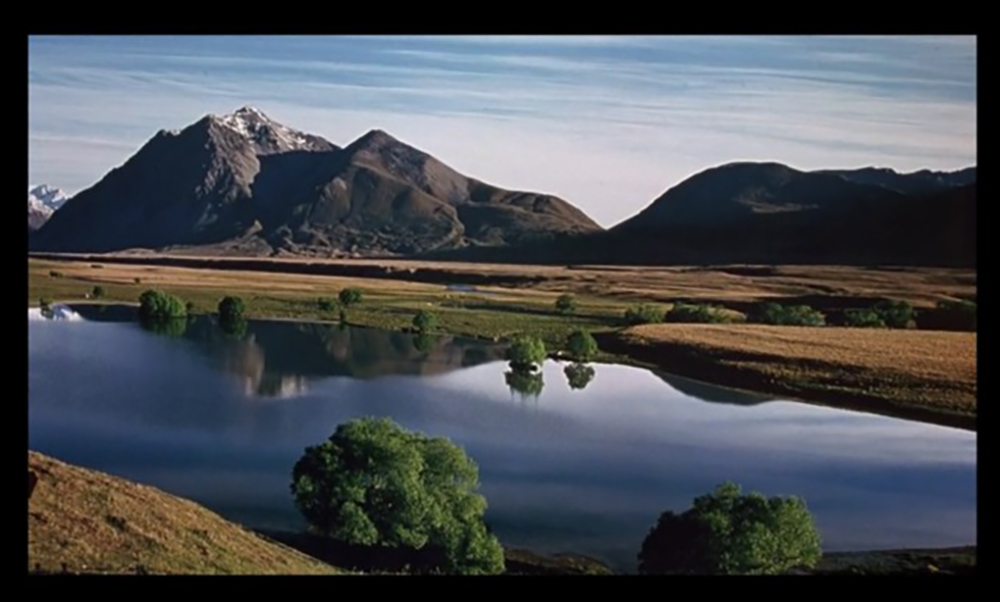
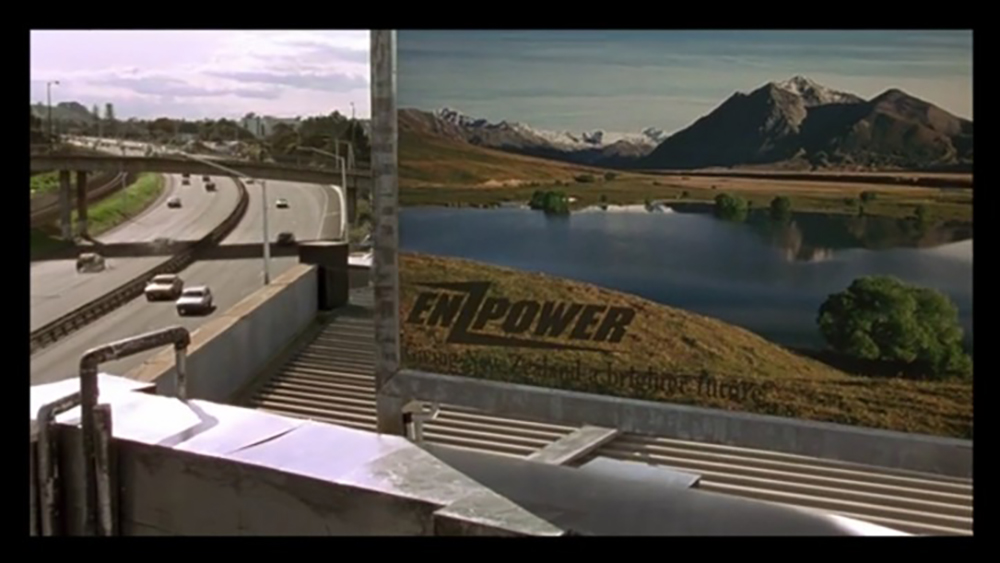
Tamahori’s nuanced emphasis on spatial representation holds significant relevance, given that location is integral to Indigenous lifeways and is a central motif within the novel. In parallel lines, Niki Caro, the director of Whale Rider, builds strong relationships with the community and consistently seeks their input during filming in Whangara. Caro’s approach of immersing himself in Whangara and actively involving the local crew is evident, and she articulates her experience as follows:
There was a lot of resistance to me telling the story the chief of the real tribe came to my office and shut the door, and he said “look, you have to be a chief about this, and he said what you have to know is we have chosen you, you have not chosen this story. Stories chosen you, and we will help you do it,” and I learned a lot about the experience. (“Writer/Director”)
In the cinematic adaptation of Whale Rider, Caro’s portrayal of Whangara fuses a respect for the Māori culture with the aesthetic demands of film. The narrative invites viewers to delve deeper into the symbiotic relationship between the community and the ocean, particularly the whales. Although the original text’s whales talk to each other, Caro opts for a subtler rendition in the film. Pai, the protagonist, shares an intuitive connection with the whales, but their communication remains non-verbal, transcending the boundaries of spoken language.
Similarly, adapting the narrative style of Once Were Warriors presented its own set of challenges. The original text adopts a stream-of-consciousness technique, immersing readers in the internal thoughts and emotions of its characters. However, Tamahori, recognizing the constraints of this style in a visual medium, changes the narrative focus to center on Beth’s journey. This decision not only makes the story more relatable to the audience but also shows the strength of a woman character.
In contrast to literature, the film is inherently a collaborative medium, encompassing intricate intellectual relations and property issues. The community aspect of filmmaking addresses the division of labor of the film, the communal aspects of the stories, and the reciprocal nature of the film and its distribution. Accountability and responsibility of the film crew emphasize the community aspect of filmmaking. The film’s division of labor resonates with the communal dynamics inherent to its creation. Inuk director Alethea Arnaquq-Baril articulates this notion by stating:
In Inuit society traditional leadership is a fluid thing and is situation specific. Where someone has more experience and knowledge they, take the lead. What are we doing? Who has the most knowledge? What is the role? And who takes the lead? It shifts with the situation. In any field you need to be constantly assessing what you are doing and who should be leading—you are not always the one that should be listened to in every situation. When someone knows better than you, you have the humility to be hands off and let someone else anticipate all of the moves. Trust those who know more than you. (Nickerson 16)
Alethea Arnanquq-Baril stresses the importance of humility, trust, and adaptability, which is crucial in such a collaborative effort as film. Her approach offers a valuable perspective on leadership, collaboration, and the appreciation of collective knowledge. As we consider the unique challenges and opportunities that arise when translating Indigenous literature to the screen, it becomes evident that the collaborative filmmaking process offers a strategic platform for capturing the fluidity and interconnectedness of Indigenous stories. This dynamic, community-driven approach in film adaptation allows Indigenous narratives to maintain cultural integrity despite the practical constraints of cinematic representation.
When examining the landscape of Indigenous film adaptations, it becomes evident that there is no homogenous approach. Some adaptations amplify certain cultural elements more than their textual counterparts. For instance, Winter in the Blood (2013) adds linguistic elements that are not present in the original text, while others might downplay or moderate particular narrative components. One primary challenge can be translating Indigenous literature’s circular structure into cinematic narratives. There are also practical challenges, such as the complexities of on-location filming or language use, especially when a director is not connected to that cultural context. Given its widespread accessibility, film often reaches a more expansive audience than literature. However, cinema also introduces unique constraints, including limited runtimes, the need to represent community-specific issues visually, and cast and crew involvement considerations.
Cinematic adaptation of Indigenous stories offers distinct opportunities to activate modes of representation that are aesthetically powerful and epistemologically grounded in Indigenous ways of knowing. While the written word depends on interiority and introspection, the visual medium brings in multisensory dimensions—gesture, landscape, rhythm, silence—that closely align with the oral traditions and performative expressions found in many Indigenous cultures. The act of watching becomes participatory, demanding an embodied engagement that mirrors a storytelling circle. These adaptations reframe the experience of story, giving presence to the often-unseen affective, relational, and spatial dimensions of the story. In The Sentence, for example, the spectral presence of Flora, the layered interactions in the bookstore, and the emotionally charged domestic scenes offer a wealth of material through which the film can engage the viewer intellectually and emotionally, invoking a shared witnessing of the story.
Moreover, screen adaptations provide a platform for intergenerational and intercultural transmission. While literature often circulates within educational or specialist circles, cinema travels differently—it permeates festivals, streaming platforms, classrooms, and community gatherings. The visual rendering of stories such as The Sentence invites broader publics into Indigenous worlds without relying on extractive frames. When produced with community accountability, these films can reshape global narratives around indigeneity, confronting settler visual regimes by centering Indigenous aesthetics, land-based relationalities, and story structures. Adaptation has a fluid structure that allows Indigenous stories to traverse different mediums, transforming how they are experienced, felt, and remembered beyond the page.
With all these considerations in mind, Louise Erdrich’s The Sentence includes complex characters as Tookie, multiple layers of Indigenous identity, and engages with contemporary issues it touches upon as the Covid-19 pandemic and George Floyd’s murder, set in a haunted bookstore. The narrative follows an Ojibwe woman, Tookie, who was imprisoned for unknowingly transporting a corpse filled with cocaine. After her release, her passion for reading leads her to a job at a bookstore specializing in Native literature. Then, the bookstore is haunted by the spirit of Flora, a person who, during her life, was superficially drawn to everything Native. The details of Flora’s death are unusual and connected to an old diary that tells the story of a Native woman who was taken captive by white people. The diary is difficult to destroy and appears to be the cause of Flora’s restless ghostly presence. Tookie is also connected to her husband Pollux and his niece Hetta, whom they consider a daughter. Moreover, she forms bonds with the employees and customers of the bookstore. Imagining these elements in a filmic context reveals how the story’s relational and layered narrative would challenge conventional industry practices and clash with typical studio norms.
Tookie’s story as an incarcerated Native woman reminds the audience of the disproportionate incarceration rates of Native peoples in the U.S., particularly in Minnesota. Tookie expresses this reality with sharp irony: “I was on the wrong side of statistics. Native Americans are the most oversentenced people currently imprisoned” (Erdrich 22). While Indigenous cinema has historically centered male protagonists—with a few exceptions such as Turquoise Rose (2007) and Naturally Native (1998)—the past decade has seen a powerful shift. Films like Falls Around Her (2018), The Body Remembers When the World Broke Open (2019), Rhymes for Young Ghouls (2019), Rustic Oracle (2019), Beans (2020), Night Raiders (2021), and Bones of Crows (2022), foreground Indigenous female protagonists and are often created by Indigenous women themselves. Imagining a film centered on Tookie’s story highlights structural tensions in this ongoing movement. Tookie’s vivid portrayal and her journey, marked by grief, resilience, and relational healing, underscore conflicts with mainstream cinematic norms: they demand extended time, communal processes, and relational accountability that conventional adaptation models seldom accommodate.
The novel explores the complexities of being Indigenous through layered depictions of urban life, cultural negotiation, and the persistent friction between identity and settler perception. One of the most effective vehicles for this exploration is the bookstore, a liminal space where Indigenous and non-Indigenous characters intersect, and where identity becomes both visible and contested. Tookie’s exchanges with customers offer an intimate look at the absurdities and aggressions Indigenous people face in urban environments. Among these, the character of Lady in Blue stands out as a composite figure of settler desire, spiritual tourism, and ignorance. Her questions2 are not only offensive but also expose how Indigeneity is continually exoticized, objectified, and treated as a consumable product.
In a filmic interpretation, Lady in Blue exemplifies the limits of visual representation. Rather than relying on dialogue, filmmakers might resort to visual shorthand (turquoise jewelry, appropriated regalia, choreographed gestures) to suggest her entitlement. Lady in Blue functions in the novel as a composite satire of settler desire, spiritual appropriation, and the commodification of Indigeneity. Bringing her to the screen would require creative control over tone, pacing, and character framing, which are often compromised by commercial mandates that prioritize broad relatability over political sharpness. While her absurdity could be translated visually through costume or performance, doing so without flattening her critique would demand editorial autonomy and timelines unconstrained by marketing pressures. The speculative adaptation of Lady in Blue therefore, reveals that translating Indigenous satire into film depends on production environments committed to Indigenous creative authority, careful relational editing, and political risk-taking. These conditions remain rare within conventional industry structures.
Minneapolis in The Sentence is not just a setting, but a living environment shaped by memory, protest, relationality, and presence. Its geography, woven with sites of grief, solidarity, and everyday survival, anchors the novel’s emotional and political currents. Bringing this layered sense of place into a filmic form would involve more than selecting recognizable locations. It would call for attention to how these spaces hold meaning for the communities they emerge from. Birchbark Books, for instance, carries not only visual familiarity but also cultural and ethical significance as a Native-owned and community-engaged space. Filming in such a location would raise important questions about how stories are grounded and what forms of permission and participation are needed to represent them with care. In this way, imagining a screen adaptation draws attention to the responsibilities that come with representing Indigenous geographies and the kinds of creative conditions required to approach that work thoughtfully.
The density of place is further complicated by the novel’s attention to historical rupture and collective resistance. The George Floyd protests thread through The Sentence as a force that rearranges space, grief, and communal presence. To represent that force cinematically would require confronting how most film production schedules and narrative conventions struggle to hold the simultaneity of uprising and mourning, urgency and reflection. The same holds true for scenes like Hetta’s appearance in the jingle dress, which resonates not only as a personal gesture but as a moment embedded in intergenerational memory and public witnessing. These sequences would not simply be filmed; they would need to be structurally rethought, requiring modes of production that do not abstract such moments into symbolism or compress them into narrative beats. In this way, The Sentence exposes how filmic adaptation of recent and relational events risks replicating the industry’s habits of simplification unless it radically reconfigures its understanding of time, space, and affect.
The text often confines characters to limited spaces, offering a unique cinematic opportunity. This can be likened to Michael Haneke’s film, Amour (2012) where the camera predominantly remains within an elderly couple’s home. In the novel, the enclosed settings, like the home space shared by Tookie and Pollux, can be effectively utilized. Their interactions, such as the emotionally charged moment when Tookie throws the ham sandwich Pollux prepared, underline the significance of food in their relationship. Filming enclosed settings would demand patience with mundane moments and imagining this shows how conventional film grammar; geared toward movement and clarity, would struggle to preserve the story’s quiet, relational nuance without slowing down dramatically.
Incorporating Flora’s ghost into a speculative adaptation invites reflection on how cinematic form engages not only with the spectral, but with layered questions of memory, embodiment, and epistemological reversal. Flora, a white woman haunted by her own appropriative proximity to Indigeneity, inverts the racial and narrative grammar of the ghost figure. Her spectral presence does not occupy the usual terrain of dispossessed Indigenous spirits in settler cinema but instead unsettles that trope by rendering the settler herself as unmoored and unable to depart. Erdrich’s own commentary frames the haunting as intimate and affective, where “a book is so much more than a transactional object; the words are flooding in, and ideas are feeling you with emotions. It is haunting in a good way” (“Louise Erdrich’s” 00:00:53 – 00:01:19). Translating that kind of interior, nonlinear presence into film would require a mode of expression unconstrained by the genre’s conventional reliance on spectacle, causality, and emotional legibility. This is not simply a matter of resisting clichés, but of recognizing how Indigenous storytelling often holds the spirit world in overlapping proximity to the living. To convey this without subordinating it to metaphor or plot device would require reconfiguring cinematic rhythm and visual logic. What Flora animates is not just narrative ambiguity but a relational disturbance that reflects Tookie’s grief, guilt, and self-recognition. Her presence, then, challenges the viewer not only through content but through form, demanding a cinematic grammar that can dwell in the unresolved without foreclosure. A speculative adaptation of this character does not point to a technical obstacle so much as it illuminates a philosophical dissonance between Indigenous relationality and dominant narrative economies of resolution and visibility.
Indigenous narratives engage with tough socio-cultural memories and histories, whether expressed through the written word or visual media. The ghost, an omnipresent symbol connected to life and death, acquires complex layers of meaning when contextualized within the Indigenous context. Diseases, forced relocations, tragic deaths at boarding schools, and the alarmingly high contemporary suicide rates all represent a collective haunting experience.
In mainstream cinematic representations, this haunting often transposes into the death or marginalization of the Indigenous characters. Such manifestations serve as reminders of the real-life erasure and invisibility faced by Indigenous communities. Jim Jarmusch’s character, Nobody, in Dead Man (1995) plays with this idea of invisibility and death referencing Westerns. Now, The Sentence’s white ghost draws attention to a reversal of roles within this whole invisibility/death narrative. Here, a non-Native character is rendered as the spectral entity, resisting departure from a space of knowledge and memory symbolized by the bookstore. It provokes contemplation on historical power dynamics and the shifting of narrative control. Literature and film serve dual roles in this exploration. While they are vehicles of remembrance, reflecting historical trauma, they also empower the act of recording, asserting Native presence, reclaiming narratives and healing. This duality is eloquently reflected in The Sentence:
Together, we straggled through a year that sometimes seemed like the beginning of the end. A slow tornado. I want to forget this year, but I’m also afraid I won’t remember this year. I want this now to be the now where we save our place, your place, on earth. (374)
In both historical and fictional contexts, this concluding sentence captures the tension of remembering, processing and expressing. Storytelling practices are transformative, grounding, and creative tools in the process of healing. Besides, endings in narratives hold a critical place, often carrying the weight of the entire story, providing closure or, in some cases, an opening to the possibility of hope, reconciliation, or resistance.
The depiction of community gatherings, the Floyd uprisings, and the understated presence of Baby Jarvis constitute some of the most structurally generative dimensions of The Sentence. These are not narrative embellishments but manifestations of Indigenous futurity, kinship, and embodied endurance, expressed through a relational grammar that resists reduction. Attempting to render these elements within a filmic register would inevitably foreground the disjunction between Indigenous narrative temporalities and the formal pressures of mainstream cinematic storytelling, which tends to privilege individualized arcs, dramatic escalation, and resolution-oriented pacing. Scenes of protest and intergenerational care unfold across layers of collective memory and affective attunement; registers that do not translate easily into plot-driven beats or visual shorthand. Jarvis, in particular, functions not as a symbol of innocence or hope but as a living articulation of continuity, one whose narrative force accrues in subtle, nonlinear ways across the novel. To sustain this form of presence on screen would require a narrative architecture capacious enough to hold the durational textures of care and survival without subordinating them to metaphor or exposition. As Daniel Heath Justice writes:
[Stories] are good medicine. They remind us about who we are and where we’re going, on our own and in relation to those with whom we share this world. They remind us about the relationships that make a good life possible. In short, they matter. (6)
This conception of story-as-medicine exceeds the dramaturgical assumptions that underpin conventional film development, where catharsis, conflict resolution, and character transformation remain dominant currencies. The speculative adaptation of these sequences thus illuminates a broader tension between Indigenous relational modes of meaning-making and cinematic structures that reward legibility, finality, and extractive clarity.
Within this rich literary narrative, there may also be some challenges when adapting this novel to screen. These include the novel’s recognition as a work of a renowned author, its sophisticated literary quality, its address of recent issues (such as Covid and Floyd’s murder), and its depiction of a ghost.
Louise Erdrich’s status as a celebrated author undoubtedly brings a pre-established audience to any film adaptation of her work, setting a foundation of interest and raising the stakes for the adaptation process. Fatzinger notes that “the stakes for adapting such beloved texts are always high” (316), which holds particularly true for works with as much literary significance as Erdrich’s. The challenge lies in navigating the expectations of readers with a strong emotional connection to the source material. Adaptors face the task of either extending Erdrich’s narrative universe or creating a visual dialogue that offers a fresh interpretation of her themes.
Erdrich’s ability to weave complex narratives that pay homage to the power of storytelling, literature, and memory is evident in The Sentence. This appreciation for the written word might suggest that her novels are best experienced within the confines of the literary form. However, adapting her work for the screen has the potential to introduce new layers of meaning by visually interpreting the metaphors and themes that are so central to her writing. The visual medium can explore elements such as the haunting and fluidity of memory in ways that prose alone may not fully convey, enhancing the audience’s engagement with the narrative.
Instead of viewing adaptation as a translation of the text to screen, it can be approached as a complementary form of storytelling—almost an expansion that respects the original while embracing the capabilities of the filmic medium. Collaborating closely with Erdrich herself, such as involving her in script discussions or inviting her to share insights during filming, can ensure that the adaptation remains faithful to the spirit of her work. This collaborative effort helps to mitigate potential disappointments and reinforces the idea that adaptation is not an act of competing narratives. Inviting Erdrich to participate in film festivals and screenings acknowledges that this process is less about fidelity and more about allowing her story to be retold in another medium, where literature and film intersect to offer audiences different dimensions of Erdrich’s work.
The formal density of The Sentence, with its layered timelines, shifts in tone, and interwoven subplots, exposes how Indigenous narrative structures often exceed what the temporal and commercial constraints of mainstream cinematic form are built to accommodate. Rather than posing a problem to be solved by editorial selectivity, the novel’s narrative sprawl highlights a fundamental misfit between the recursive, relational storytelling Erdrich deploys and the linear compression typically required by feature-length film. Any attempt to translate that complexity into cinematic terms would demand a reconsideration of what counts as narrative coherence, whose stories are foregrounded, and how emotional and political significance are distributed across characters and scenes. From this perspective, the novel functions not as a template for adaptation but as a pressure point that reveals what current industry conventions might not hold.
Centering an adaptation on Tookie is not just structurally consistent with the novel; it is analytically productive. Her perspective holds together the novel’s layers of grief, incarceration, historical rupture, everyday care, and the absurdities of settler desire. The narrative unfolds through her shifting interiority, where affect and memory are entangled in ways that resist resolution. Tookie’s consciousness functions less as a device for cohesion than as a site where contradiction, refusal, and relational entanglement are held in tension. Bringing this to film would require translating narrative voice into visual form, through gesture, silence, spatial orientation, and editing, but such techniques often demand emotional legibility and narrative momentum. Cinematic storytelling tends to streamline what the novel allows to remain unresolved. Following Tookie into a speculative adaptation thus makes visible the structural frictions between Indigenous narrative time and the conventions of commercial filmmaking. Her centrality does not simplify the adaptation process; it sharpens its stakes, revealing how dominant cinematic forms are ill-equipped to hold storytelling grounded in contradiction, simultaneity, and epistemological excess.
Furthermore, film enables a different temporality than literature. While the novel unfolds over a year with moments of recursive narration and internal pacing, the film can condense, rearrange, or visually layer events to foreground emotional intensities and thematic resonances. Centering Tookie’s presence as she navigates the political, spectral, and relational forces around her would require cinematic grammar capable of holding contradiction and simultaneity, which are formal capacities that commercial filmmaking typically subordinate to clarity and forward momentum. This difference is not just stylistic; it reshapes the viewer’s understanding of her role. The cinematic Tookie does not just tell us her story; she embodies it in visual terms. Thus, the adaptation has the potential to shift from narrative focalization to a performative and aesthetic focalization, enhancing the emotional and symbolic textures of the novel through the audiovisual language of cinema.
In the current moment, the emergence of Indigenous narratives that grapple with contemporary realities—rather than remaining tethered to romanticized or static historical representations—marks a significant shift in cultural production. These stories challenge reductive temporal frameworks that confine Indigeneity to the past, asserting instead its presence within the urgencies and traumas of the present. Yet addressing events as immediate and multifaceted as the Covid-19 pandemic introduces unique narrative and ethical tensions. The pandemic remains an unfolding global crisis with uneven consequences across Indigenous communities, making any artistic representation necessarily provisional and charged. Representing such a phenomenon within Indigenous frameworks raises further stakes, particularly given the historical weight of state-imposed disease, medical neglect, and structural violence within Native communities. Louise Erdrich herself acknowledges the narrative difficulty of writing amid such volatility, noting:
This is the first book I’ve ever written in real-time [. . .] I didn’t know how to handle all of this at all, so all I could do was to try to keep it very narrowly focused through the eyes of an incredibly fallible character one woman [. . .] It was, without doubt, the most challenging piece of writing I have undertaken. (“Louise Erdrich’s” 00:01:40 – 00:02:14)
The lived experiences of many Indigenous communities might differ significantly from the characters in Erdrich’s novel, and for many, the memories and effects of the pandemic are still fresh. Consequently, the adaptors bear a significant responsibility and a balance between hope and despair in their narrative approach. Emphasizing moments of community solidarity and showing the universality of the pandemic’s effects might offer some understanding to the audience.
The novel’s rendering of lockdowns, protests, and hospital encounters is marked by spatial compression and affective intensity—dense environments that collapse private grief into public emergency. Translating these scenes into film would expose the limitations of production models that prioritize efficiency, cost control, and visual accessibility. Hospital rooms, protests, or community spaces are not just filming locations but socially saturated terrains; representing them faithfully would require extended timelines, localized collaboration, and flexible production frameworks rarely available in commercial filmmaking. These spatial and temporal demands reveal how the novel’s density strains against the film industry’s default settings, especially its tendency to isolate, dramatize, and resolve.
This tension becomes especially pronounced in any attempt to represent Flora’s ghost. The novel offers no spectacle; instead, her presence is mediated through Tookie’s perception, subtle, intimate, and culturally located. As Tookie says:
I stood before the mirror but looked down, into the sink, my chin frozen to the top of my collarbone. I couldn’t lift my head. I knew, beyond a doubt, she was there. I felt her staring at me from the glass. (Erdrich 192)
This moment makes clear that Flora’s ghost is not an apparition but a relational presence, tethered to memory, guilt, and the ongoing pressures of settler desire. Conventional ghost imagery—visual effects, fades, or sudden apparitions—would flatten the ontological ambiguity the novel sustains. Even attempts to “respectfully” visualize her through lighting or sound still risk reinforcing genre tropes rather than conveying the affective density of Indigenous presence. The difficulty is not technical but epistemological: cinematic form, as currently constituted, is poorly equipped to express the porousness between life, death, and spirit in Ojibwe worldview without distorting it into allegory or spectacle.
What Flora’s ghost reveals, then, is not just the need for careful representation but the insufficiency of representational tools themselves. Even with full authorial involvement or collaborative development, the industry’s formal expectations—clarity, legibility, rhythm—strain against the novel’s subtle refusal of resolution. In this sense, the ghost becomes a diagnostic figure: her presence illuminates how Indigenous cosmologies unsettle the cinematic grammars they are so often asked to inhabit.
The novel’s use of Anishinaabemowin/Ojibwe appears in brief but charged exchanges that resist translation as resolution. Language here is not decorative but affective, relational, and structurally significant. One exchange between Tookie and Asema captures this tension:
“So, what’s Ojibwe for tattoo?”
Asema looked alarmed. “I have no idea!” She muttered possibilities for a while and then texted Hank. She stared at her phone for a moment:
“Mazimizhaga’ebii’igan,” she said.
“That's a lot longer word.”
“Everything’s a lot longer in Ojibwe.” (48)
This moment dramatizes hesitation, uncertainty, and intimacy, foregrounding Ojibwe as a living presence whose rhythm and duration exceed subtitles, didactic framing, or tidy integration into cinematic flow. Film, which often depends on linguistic legibility and audience comprehension, would struggle to hold this tension without reducing Ojibwe into emblem or explanation. What appears in the novel as layered, affective interaction risks becoming a moment of translation, severed from its social roots.
Rather than an “opportunity” for language revitalization on screen, this scene reveals how Indigenous languages exceed representational containment, pointing to a formal dissonance between linguistic survivance and film’s default modes of clarity, pacing, and accessibility. The novel does not translate Ojibwe for us; it makes us feel its complexity. A cinematic version would have to reckon with the limits of subtitle, duration, and linguistic framing, and in doing so, confront the industry’s discomfort with untranslatability itself.
Speculating on the adaptation of The Sentence makes visible the profound incompatibilities between Indigenous storytelling and the structural demands of the film industry. This is not simply a matter of narrative complexity or cultural sensitivity, but of form: Indigenous stories like Erdrich’s are shaped by nonlinear time, relational geographies, and layered modes of memory and perception that exceed the temporal compression, market pacing, and narrative resolution demanded by most film production models. Telling such stories on screen would require more than consultation or care; it would demand fundamental changes to the cinematic form and the industrial logics that govern it.
Throughout this essay, each speculative moment has exposed a particular point of friction: the portrayal of Ojibwe language resists cinematic legibility; the spectral presence of Flora refuses genre containment; the centralization of Tookie reveals the limits of character-driven coherence; community protest and ceremonial space strain against production timelines and audience expectations. Rather than offering solutions, these examples collectively expose what the adaptation process, as currently structured, cannot hold.
This does not mean that Indigenous stories should not circulate through film. But it does mean that their circulation under current conditions remains constrained, compromised, and frequently distorted. The Sentence does not simply invite adaptation—it challenges it. In doing so, it reveals that meaningful representation is not just a matter of access or inclusion, but of structural transformation. The question is not how to adapt such a novel, but what would need to change for film to become a medium capable of holding Indigenous sovereignty, in form as well as content.
The role of collaboration in this process cannot be understated. As highlighted in the analysis of various adaptations, the involvement of the original authors, community members, and cultural consultants enriches the adaptation, allowing it to be a shared endeavor that honors the collective knowledge and lived realities of the Indigenous community. Such collaborative approaches, as seen in the potential adaptation of Louise Erdrich’s The Sentence, demonstrate how film can become a dialogic space where the literary and cinematic mediums intersect, offering a more layered and expansive representation of Indigenous stories.
The discussed adaptations, from House Made of Dawn to Whale Rider, emphasize the importance of creativity, respect, and sensitivity to the source material and related community. A crucial question lies at the core of this: What does it mean to adapt/retell/reimagine an Indigenous story? Is fidelity more about preserving every narrative detail, or capturing the story’s essence? This fidelity extends to community engagement, accurate representation, and acknowledging the interconnectedness of Indigenous lifeways with storytelling. Furthermore, while adaptation studies within academia have witnessed shifts in the discourse, the discussion surrounding Indigenous adaptations provides an intriguing perspective, infusing it with perspectives rooted in Indigenous storytelling practices. It becomes evident that when adapting Indigenous literature, the very act becomes a part of a larger conversation about the representation and celebration of the related cultures.
To imagine adapting The Sentence is not to map out its cinematic possibilities. It is to confront the structural limits of adaptation as currently practiced. The act of speculation becomes a method of critique, revealing that translation across media demands transformation at the level of form, governance, and production, not just consultation or care. Following Tookie’s story through the medium of film means stepping into a world of protest, haunted shelves, and living languages. It means reading in the bookstore, sensing Flora’s presence, struggling to learn Ojibwe. That participatory intimacy exposes the tension between what Indigenous narratives ask of us and what cinematic forms, as they exist, are built to deliver. The question is no longer how to adapt such stories, but whether current film structures can carry the epistemic and relational demands that Indigenous storytelling brings into view.
Endnotes
1 Linda Hutcheon refers to this ubiquitous and constantly changing nature of adaptation in her 2006 book A Theory of Adaptation, and for her, this process is repetition without replication.
2 Some examples from the novel: “Questions for Tookie: Can you direct me to the nearest ayahuasca ritual? Can you sell me some vine of the dead? How do I register to be an Indian? How much Indian are you? Can you appraise my turquoise necklace? Can you sell it for me? What’s a good Indian name for my horse/dog/hamster? How do I get an Indian name? Do you have an Indian saying about death? What’s a cultural Indian thing that would fit into our funeral service? How do I find out if I’m an Indian? Are there any real Indians left” (77).
Works Cited
Caro, Niki, director. Whale Rider. Newmarket Films, 2002.
Duff, Alan. Once Were Warriors. Vintage, 1990.
Erdrich, Louise. The Sentence: A Novel. Harper Perennial, 2021.
Fatzinger, Amy S. “Winter in the Blood: A Case for Maintaining Cultural Content in Adaptations of Indigenous Stories.” Adaptation: The Journal of Literature on Screen Studies, vol. 9, no. 3, 2016, pp. 307–27.
Haneke, Michael, director. Amour. Les Films du Losange, 2012.
Hearne, Joanna. Native Recognition: Indigenous Cinema and the Western. SUNY P, 2012.
Ho, Elizabeth, and Brandon Chua. “Introduction: Global Literary Adaptation in the Twenty-First Century.” The Routledge Companion to Global Literary Adaptation in the Twenty-First Century, Edited by Elizabeth Ho and Brandon Chua, Routledge.
Howe, Dessen. “Warriors’: Powerful Pain.” The Washington Post, 3 Mar. 1995. https://www.washingtonpost.com/archive/lifestyle/1995/03/03/warriors-powerful-pain/68e1b49f-b492-49b1-a776-ba86a1f2419f/.
Hutcheon, Linda, and Siobhan O’Flynn. A Theory of Adaptation. 2nd ed., Routledge, 2013.
Ihimaera, Witi. The Whale Rider. Harcourt, 1987.
Jarmusch, Jim, director. Dead Man. Miramax Films, 1995.
Justice, Daniel Heath. Why Indigenous Literatures Matter. Wilfrid Laurier UP, 2018.
King, Thomas. Medicine River. Penguin, 1989.
Lessing, Gotthold Ephraim. Laocoon. Translated by Robert Phillimore, George Routledge & Sons, E. P. Dutton & Co, 1905.
“Louise Erdrich’s ‘The Sentence’ Explores Racial Tensions in a Divided Minneapolis.” YouTube, uploaded by PBS Newshour, 5 Nov. 2021, www.youtube.com/watch?v=El9r9wCmyss&t=289s .
Margolin, Stuart, director. Medicine River. UAV Corporation, 1993.
Martens, Emiel. “Maori on the Silver Screen: The Evolution of Indigenous Feature Filmmaking in Aotearoa/New Zealand.” International Journal of Critical Indigenous Studies, vol. 5, no. 1, 2012, pp. 2–30.
Momaday, N. Scott. House Made of Dawn. U of Arizona P, 1968.
Morse, Richardson, director. House Made of Dawn. New Line Home Video, 1972.
Nickerson, Marcia. On-Screen Protocols & Pathways: A Media Production Guide to Working with First Nations, Métis and Inuit Communities, Cultures, Concepts and Stories. 15 May 2019, https://iso-bea.ca/wp-content/uploads/2023/10/ISO_On-Screen-Protocols-Pathways.pdf. Accessed 01 Oct. 2023.
Royal, Haunui, director. Beth’s World. NZ On Screen, 1996.
Schweninger, Lee. Imagic Moments: Indigenous North American Film. University of Georgia Press, 2013.
Smith, Alex, and Andrew J. Smith, directors. Winter in the Blood. Ranchwater Films, 2013.
Stam, Robert. “Beyond Fidelity: The Dialogics of Adaptation.” Film Adaptation, edited by James Naremore, Rutgers UP, 2000, pp. 54–76.
Tamahori, Lee, director. Once Were Warriors. Fine Line Features, 1994.
“Writer/Director Niki Caro on The Whale Rider.” YouTube, uploaded by American Film Institute, 12 Nov. 2020, www.youtube.com/watch?v=ptqau4IXQ1w.