VOL.54, NO. 1
Engaging with Ireland’s traumatic past: Mielants’s adaptation of Keegan’s Small Things Like These
Deividas Zibalas (Vilnius University)
Introduction: revisiting Ireland’s past in Small Things Like These
This paper focuses on Tim Mielants’s recent film Small Things Like These, which has been received exceptionally well. It won Best Film, Best Screenplay for Enda Walsh, and Best Lead Actor for Cillian Murphy at the 2025 Irish Film and Television Awards. The film is an adaptation of Claire Keegan’s historical fiction novel of the same name. Keegan is a prominent contemporary Irish writer known for her collections of short stories and novellas, such as Foster, which was adapted into the Oscar-nominated film The Quiet Girl. Just over one hundred pages long, Small Things has been praised for its elegantly concise and highly evocative prose (e.g., Merrill; Silman). The novel has received considerable critical acclaim, winning the Orwell Prize for Political Fiction and being shortlisted for the Rathbone Folio Prize and the Booker Prize in 2022.
The novel and its adaptation confront the troubled past of Ireland, particularly the infamous Magdalene Laundries, Catholic-run institutions known for having exploited unmarried mothers and other women deemed morally transgressive (Brangan 400). Women were subjected to humiliation and exploitation there, and their newborns (those that survived) were sometimes sold off to wealthy families (see Sixsmith).1 In “A Note on the Text” appended to the novel, Keegan specifies that these institutions may have inflicted pain and suffering on as many as 30,000 women before closing down in 1996. These “asylums” were not only spaces of exploitation but also “sites of erasure”: women lost their possessions, names, and were not allowed so much as to allude to their past (Brangan 409). Unfortunately, Ireland’s traumatic past has not been fully redressed despite the Irish Prime Minister’s formal apology in 2013 on behalf of the State’s involvement. Compensatory measures for the victims have been insufficient (Costello 44), and the attempts of successive government have been marked by “slow progress,” “constant strategies of avoidance,” and “unfulfilled promises” (Sebbane 75).
The looming presence of the Magdalene laundries provides the historical context for Keegan’s Small Things. The story is set in New Ross, a town in County Wexford, and revolves around Bill Furlong, a 39-year-old self-made man. His mother, Sarah, gave birth to him out of wedlock and might have ended up in a Magdalene laundry were it not for Mrs. Wilson, a wealthy protestant widow. At the time of the story, Bill is a proud father of five daughters and a prosperous coal merchant. With Christmas approaching, he helps his men deliver coal to various parts of the town, including the local convent. There, he stumbles upon a girl, his mother’s namesake, locked up in a coal shed. Upon escorting her back inside the convent, Bill is confronted with the scale of abuse the girls undergo there. Having been not so subtly threatened by Sister Mary, Mother Superior, and given hush money, he understands that acting may potentially jeopardize the future of his daughters, who attend a school run by the convent. On Christmas, he finally musters up his courage and rescues Sarah despite the risks.
Countless reviews and a few scholarly articles have been written about the novel, which offer complementary ways of reading it. Like in most of Keegan’s works, a family is at the centre of everything (Ash). Knowing that his daughters might suffer as a result of his actions, Bill has to make a difficult decision. The centrality of the moral dilemma has prompted some to read the story as an existentialist fable (e.g., Cornwell).2 Pérez-Vides, more specifically, interprets Bill’s decision to help as the novel’s way of promoting empathy towards the victims of the Magdalene laundries. Others have proposed reading the novel as an investigation into “the mechanics of complicity” (e.g., Butler).3 Keegan casts a critical eye on a small community that remains silent and, as a result, complicit in the crimes. Hakkıoğlu and Güneş have interpreted this passivity in relation to the process of scapegoating, which is meant to safeguard the interests of the rich. Reviewers have also called the novel a modern Christmas classic, drawing comparisons to Charles Dickens’s A Christmas Carol (e.g., Charles, Đinh). Both stories take place during Christmas, and Small Things contains several direct references to Dickens.
Mielants’s film is a relatively faithful rendition of Keegan’s novel in the sense of retaining the “cardinal functions” of the story (see McFarlane).4 I would argue, however, that the film’s strength lies in its deviation from the novel in ways that reconfigure our understanding of the original story as well as our affective response to Ireland’s troubled past. While the novel relies on things left unsaid, the film is intent on excavating the trauma of the past. Mielants makes his intentions clear in several interviews, revealing his interest in the theme of grief (Chilingerian). Particularly, he is intent on exploring the theme of “postponed” grief, which he understands due to his personal experiences related to the death of his brother (Roxborough). Grief is a natural response to losing someone close, but it may become complicated, resulting in more intense symptoms (Shear et al). If postponed grief is understood as something that afflicts a person later on in life rather than at the time of the loss (Stroebe et al), then it becomes the perfect lens for understanding the unresolved trauma of the Magdalene laundries. Bill’s confrontation with his past serves as a metaphor for Ireland’s persistent struggles with its painful past.
The paper explores how the film reinterprets Keegan’s novel in relation to Ireland’s historical trauma. The analysis adopts an interdisciplinary perspective, combining adaptation theory with trauma theory and theory of mind. By conceptualizing adaptation as a creative reinterpretation (Hutcheon) involving “a complex series of operations ” (Stam 68), the paper first examines how Keegan’s text is transformed. Particular attention is given to the poetics of postponed grief constructed by the film, which reshapes Bill’s relationship with the past and illustrates the persistence of trauma across generations. The transformative operations rely on the specific protocols of the medium, such as the five tracks of filmic expression (Stam 59), which the second part of the paper takes into consideration to reflect how the film fosters a heightened sense of empathy and reconfigures our engagement with both the story and Ireland’s history. Finally, the analysis addresses the critique of societal structures that enabled historical abuse, showing how the adaptation engages in a “multileveled negotiation of intertexts” (Stam 67).
Constructing the poetics of postponed grief: Bill’s childhood memories
Mielants’s Small Things could be situated within the tradition of Magdalene Laundry themed films, such as The Magdalene Sisters, that invite us to revisit Ireland’s traumatic past. The film focuses on Bill’s encounter with the local Magdalene laundry, as well as his own past as someone born out of wedlock in Catholic Ireland. Sarah, his mother, managed to avoid being confined to a laundry by the grace of her employer, Mrs. Wilson, but Bill still received a fair share of psychological abuse: being spat at just because he was born out of wedlock. The blame for the Magdalene laundries falls on the Catholic Church and the State. However, the film (and the novel) seems to be drawing our attention to the culture of prejudice and intolerance that facilitated the existence of the laundries and the systematic abuse of women. In addition to being abused and shunned by his peers, Bill lost his mother at a young age and never knew his father due to the culture of silence surrounding “fallen” women. The combination of these factors clearly points to the traumatic nature of his past: he was rejected by his community because of his status, and he lost familial ties after his mother’s death.
The novel and the film approach Bill’s traumatic past in different ways. Compared with the novel, the film is far more explicitly concerned with Bill’s past and its effects on his adult life. The change of focus is especially evident in light of the fundamental distinction between story and plot. It becomes apparent that the story, or, as McFarlane puts it, “the raw material,” is virtually identical in the novel and the film (23). However, how it is told, particularly in relation to Bill’s childhood, differs profoundly. From the onset, the novel offers a concise summary of his past:
His mother, at the age of sixteen, had fallen pregnant while working as a domestic for Mrs. Wilson, the Protestant widow who lived in the big house a few miles outside of town. When his mother’s trouble became known, and her people made it clear that they’d have no more to do with her, Mrs. Wilson, instead of giving his mother her walking papers, told her she should stay on, and keep her work. (Keegan 5–6)
As a schoolboy, Furlong had been jeered and called some ugly names; once, he’d come home with the back of his coat covered in spit, but his connection with the big house had given him some leeway, and protection. He had gone on then, to the technical school for a couple of years before winding up at the coal yard, doing much the same work as his own men now did, under him, and had worked his way up. (Keegan 7)
His mother had died suddenly, keeled over on the cobblestones one day, wheeling a barrow of crab-apples up to the house, to make jelly. A bleeding to the brain, was what the doctors had called it afterwards. Furlong was twelve at the time. (Keegan 8)
Bill’s relationship to his past is not problematized as something that seeps into the present. The formative events of his childhood are introduced explicitly in an almost matter-of-fact fashion. We find out that Bill was conceived out of wedlock, that Mrs. Wilson took Bill’s mother in, that she suddenly died, etc. The only mystery that remains is who Bill’s father is. We also gain insights into the historical reality of the time by learning how prejudiced the Irish society was, and how other children mocked Bill. Naturally, in theory, we understand how traumatic all these experiences must have been for him, his mother, and other people involved. These biographical details, however, are not constructed as memories Bill contemplates or is fixated on throughout the novel. These details are presented as facts intended to help us understand why Bill decides to help the girl, his mother’s namesake.
The film, however, focuses on Bill’s childhood as its central preoccupation. It transforms the source text through the operations of amplification and concretization. Mielants picks up on the passages outlining Bill’s past at the start of the novel and develops them into fully fledged scenes that unfold before our eyes. We do not simply learn about his past, but we relive it together with him in a series of flashbacks that offer us glimpses into his past. The first flashback is concerned with Sarah, Bill’s mother, scrubbing off spit stains from his coat, and Bill reading a passage from A Christmas Carol. Sarah is crying at the kitchen sink whilst trying to clean the coat, and we see Bill secretly looking with distress in his eyes at his mother. In the next flashback, we witness Bill unwrapping Christmas presents and being highly disappointed because he received a hot water bottle and not the jigsaw puzzle he wanted. The next one is the most dramatic and poignant flashback of the film, featuring Bill witnessing his mother collapse on the ground and die in Ned’s arms, while in the next one he is comforted by Mrs. Wilson and is given one week off before he has to return to school. The last series of short flashbacks occurs towards the end of the film when Bill finally realizes that Ned is probably his father. The epiphany forces him to reevaluate his memories and, together with him, we see them in a new light. We realize that the flashbacks offered a somewhat incomplete version of the past.
The narrative structure of Mielants’s film is geared towards portraying Bill’s psychological trauma and thus contributes to the poetics of postponed grief. He is in a constant state of agitation throughout the film: he is sullen, withdrawn, he suffers from insomnia and experiences severe panic attacks. Eileen, his wife, begins to suspect that something is amiss, though she is convinced that Bill is simply tired due to the increased workload. The use of flashbacks, however, suggests that there is a more serious underlying cause for his anxieties. In her seminal study on the history and functions of flashbacks, Turim highlights their crucial role in establishing the psychology of characters and suggests that they implicitly point to “a psychoanalytic dimension of personality” (12). The intrusiveness of Bill’s childhood memories, represented cinematically in the form of recurring flashbacks, highlights, in the words of Caruth, the “unassimilated nature” of Bill’s traumatic experiences and indicates that he is suffering from unresolved grief (Unclaimed Experience 4). Though Bill is a grown man with his own family, he cannot help but constantly relive some of the most traumatic childhood memories. According to Caruth, trauma is not “locatable in the simple violent or original event in an individual’s past” but instead returns to haunt the individual later on at some point in life (Unclaimed Experience 4). We can see how the unresolved trauma haunts him and impedes his life as an adult, affecting his relationship with others as well as his psychological well-being.
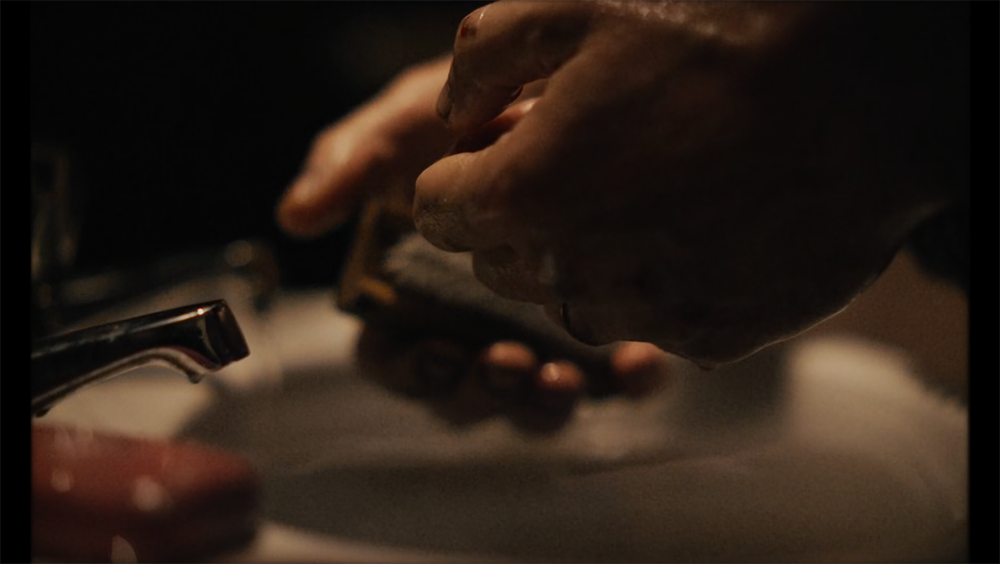
Editing becomes another important device in constructing the poetics of postponed grief in the film. The flashback concerned with Bill witnessing his mother die, the root of Bill’s trauma, is introduced by means of parallel editing. We see Bill simultaneously as a child seeing his mother collapse and as a grown-up reacting to the memory. The scene alternates between him running towards his mother and trying to wash the dirt from his hands in a sink. The camera focuses on a close-up shot of his hands, and the increasing intensity of his rubbing off dirt from his fingers with a brush corresponds to the increasing emotional distress he is experiencing while remembering the event (see Figure 1). The scene in the present moment of the narrative reaches the climax when Bill, as a boy, reaches his mother in the flashback and sees her lifeless in Ned’s arms. He can no longer take it and collapses over the sink and then crouches on the floor. The editing selected for the scene perfectly encapsulates the impact of the “belatedness” of traumatic experiences (“Trauma and Experience” 9). His childhood memories elicit such a strong reaction from him in the present that he feels physically weak.
Changing the affective response to the past: heightened empathetic engagement
The film makes full use of the diacritical specificity of its medium to transform our engagement with Bill’s story. The film combines the use of flashbacks with elements of “external stimulation,” such as facial expressions and music (Alber 266), to change our response to the traumatic past of the country. Instead of thinking about the past in the abstract, in terms of statistics, the fact that as many as 30,000 women might have suffered, we respond to history via Bill’s fictional story in highly emotional terms. In addition to exposing the roots of Bill’s trauma, the flashbacks, then, contribute to creating a completely different “affective and/or intellectual experience” than the novel (McFarlane 26). The very fact that we witness the events from Bill’s childhood unfold before our eyes elicits a heightened emotional reaction from us.
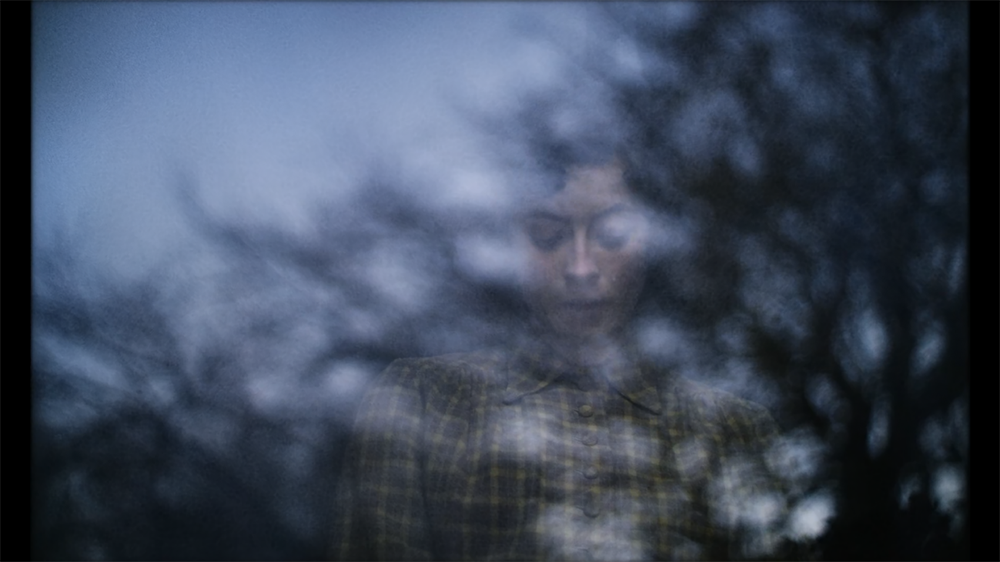
The images of Bill and his mother suffering increase our empathetic engagement with his character and the traumatic past of the country. After all, we are naturally more inclined to empathize with those who are in pain (Grodal and Kramer 23). The first flashback showcases the toll that Bill being abused and spat on at school takes on his mother. We can see and hear that Sarah is crying whilst trying to remove the spit stains, and our natural response is that of sympathy. The act of crying is one of the central “regulators of emotions,” particularly concerning empathy (Grodal and Kramer 21). The empathic resonance is enhanced by the affect-laden shot of Sarah’s distressed face, tears running down her cheek (see Figure 2). According to Grodal and Krammer, when we see pain “manifesting itself in the facial features of a character we tend to mimic these features,” which activates the same areas in our brain were we to feel pain ourselves (24). The already mentioned flashback that deals with Bill’s mother dying gives us another direct experience of a traumatic event from his past. Bill sees her collapse, starts running towards her and is stopped by Mrs. Wilson who calls for Ned. Another affect-laden shot of Sarah’s face covered in blood, as well as Ned’s panicked face, elicits a strong emotional response from the viewer (see Figure 3). All these harrowing scenes generate a heightened sense of empathy towards Bill’s plight.
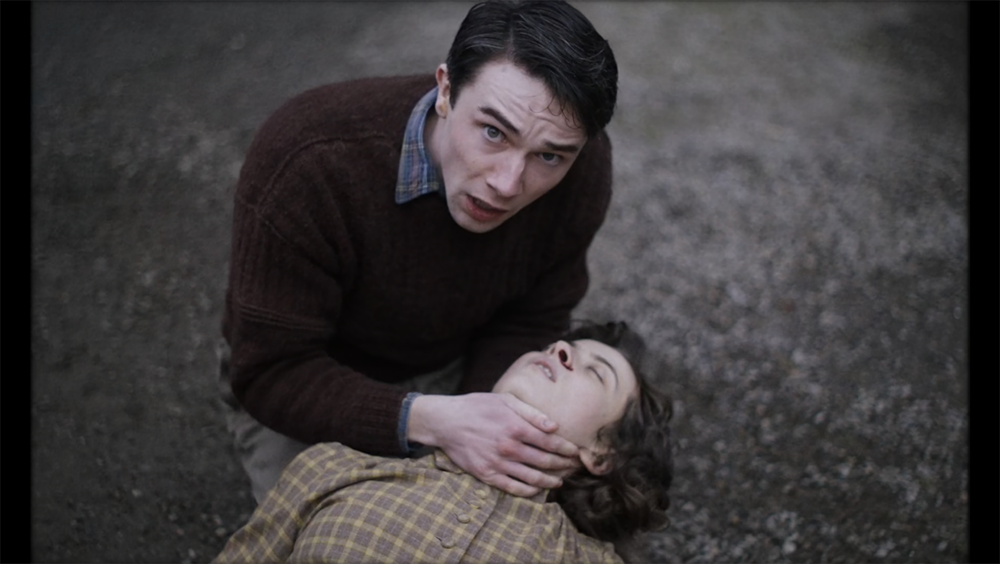
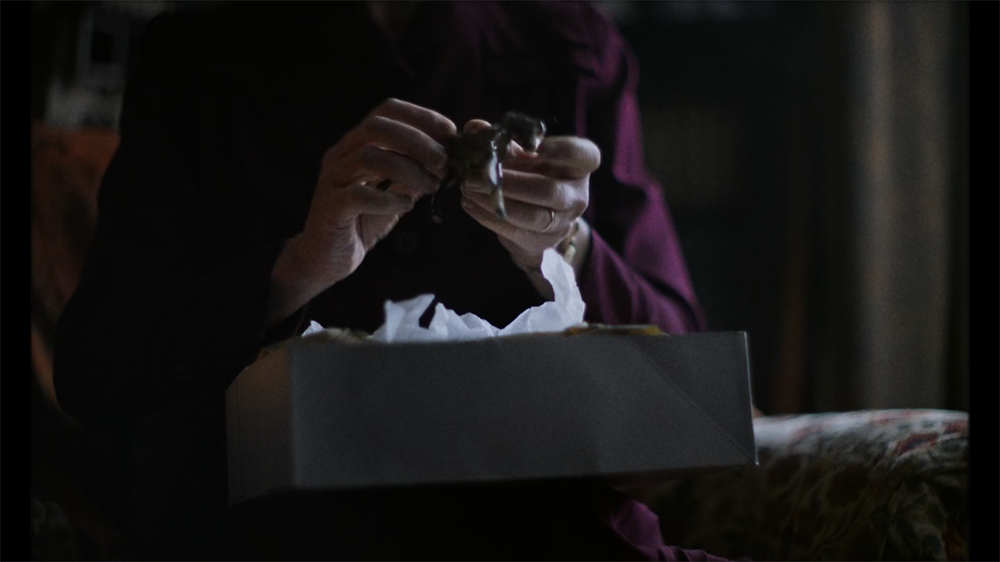
The flashbacks are also used to help us form a more intimate relationship with Bill, increasing our emotional engagement with his situation. What primarily allows us to assimilate the character’s situation is sensing his “position” (Grodal and Kramer 26). We not only empathize more with Bill because we witness his childhood more directly than in the novel, but we are also invited to identify with his perspective in the film. In the first flashback, we see his affective response to his mother crying. We are meant to understand the situation by identifying with Bill’s subjective perspective offered by the camera. The perspective of the scene alternates between more objective point of view shots, when we see his mother from the front, and Bill’s POV. In a series of shot-reverse-shots, we are shown Bill secretly looking at his mother crying, and we see complete devastation in his eyes. It makes it easier for us to empathize with him by seeing the past through his eyes. Similarly, other flashbacks invite us to identify with Bill’s perspective by showing part of the scene through his eyes. In the memory where Mrs. Wilson, Sarah, and Bill are exchanging Christmas presents, the camera shows the women in a low angle shot, imitating Bill’s perspective, who is propped on the carpet (see Figure 4). In the already discussed flashback where Bill witnesses his mother die, we are shown his mother and Ned holding her in his arms through a high angle shot emanating from Bill looking down on his collapsed mother (resee Figure 3). This camera perspective invites us to identify with Bill and share in his emotions.
The flashbacks also reveal Bill’s motivation for taking the leap of faith and helping Sarah, the girl locked up in the coal shed. The film focuses on how important Mrs. Wilson was and how all the “small things” she did amounted to something more and shaped who Bill is today. She tries to comfort him after the spit incident and tells him not to listen to his classmates. She is concerned with his education and listens to Bill read Dickens, and she also comforts him and takes care of him when his mother passes away. These are tangible acts of kindness we see bestowed upon Bill. These flashbacks allow us to understand Bill better and understand why he himself engages in acts of kindness. In the novel, we learn from a dialogue between Bill and Eileen that he met Mick Sinnott’s boy on the way home and gave him loose change. In the film, we can see the meeting actually taking place before he gets home. By developing the episode into a fully-fledged scene, the film emphasizes Bill’s willingness to help those who have it tough. Mrs. Wilson did “small things like these” for him when he was a child, and now he is willing to do small gestures of kindness for others because he knows that it counts. Although this episode is mentioned in the novel, in the film we can actually see it happening: the boy’s reaction, Bill’s smile after the deed. This scene stays with you, and we realize that Bill is the kind of man who not only thinks about his family but is willing to help the entire community, unlike Eileen, his wife, who tells Bill to lie low and be concerned with his family and what he has.
There are other ways in which the flashbacks of the film keep us engaged with Bill’s story. We become active participants in trying to reconstruct the events from his past and make connections to his present without any explicit explanations. The flashbacks must be particularly confusing for what Hutcheon terms “unknowing audiences,” those people who are not familiar with Keegan’s novel (120). We see different people in the flashbacks, and we do not really know who they are. This lack of clarity keeps us, the viewers, invested in the story, as we are meant to connect the dots ourselves. The first flashback relates to what Turim describes as “code of enigmas,” borrowing from Barthes’s works. It is used to “constitute an enigma and lead to its solution” towards the end of the film (Barthes 17). We see Bill’s mother stepping outside after cleaning the coat and meeting a man. The camera slowly pans to the kitchen, and we see Bill’s face. In the reflection of the window, we see his mother being hugged by a man. Later, we see the man again comforting Bill after he runs off to the cowhouse, and later, holding Sarah in his hands when she dies. Afterwards, we see Bill asking Mrs. Wilson about his father and whether he knows what happened to Sarah.
After piquing our curiosity and maintaining it throughout the film, the enigma regarding Bill’s father is revealed. The final series of flashbacks reveals that the man was always there for Bill, taking him to the barber shop, helping him with his homework, etc. These flashbacks provide us with the complete version of Bill’s past, which was withheld from us at the start of the film. We again see the episode where Sarah is comforted by the man outside; however, this time, we see the ending of the interaction, namely, Ned kissing Sarah. As a child, Bill could not connect the dots, but now, in retrospect, he realizes that Ned is his father.
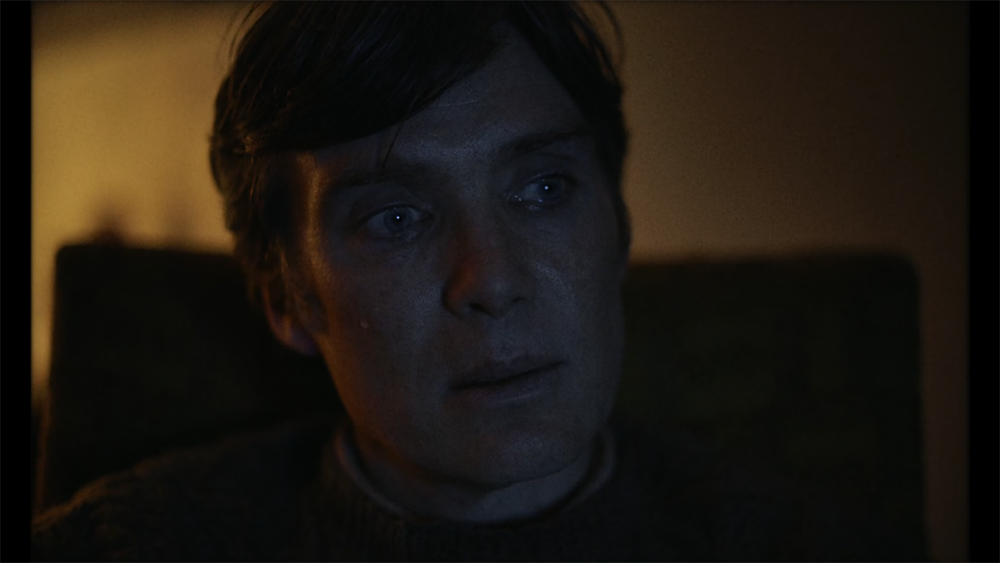
The film constructs a heightened sense of empathetic engagement with Bill’s story not only through flashbacks but also by focusing on how he responds to these memories as an adult. The film reveals that he is still profoundly affected by his past and has not fully processed his experiences. The film offers a qualitatively different experience from the novel. The film has at least five materials of expression (Stam) involved in shaping our understanding of and response to Bill as a character. Elements of mise-en-scène, in particular, contribute to constructing a heightened sense of empathy towards Bill. Before most flashbacks occur, we are offered close-up shots of Bill’s face, and we can clearly see pain in his eyes. After some of the flashbacks, the camera also focuses on Bill’s face, allowing us to see him physically respond to his childhood memories. After remembering how he did not get the Christmas present he wanted as a child and Ned comforting him in the cowhouse, we see Bill’s watery eyes and a tear rolling down his cheek (see Figure 5). The same happens when Bill realizes that Ned is his father. He is sitting in a barber’s chair in front of a mirror, and as he realizes it, we can see him crying. Bill’s responses to his memories in the form of flashbacks reveal that he has not yet processed his traumatic childhood, and it affects him strongly in the present. We, the viewers, cannot help but feel strong empathy towards him, seeing his raw emotions on display.
Music is another important device for “inducing emotional regulation ” (Grodal and Kramer 29) in the film and adds to the poignancy of Bill’s memories and his reactions to them. The same sombre melody plays in the background before he remembers his mother crying while she is cleaning his coat, when he recalls his mother’s death, and when he reflects on all the memories related to Ned towards the end of the film. It creates a melancholy atmosphere, which further adds to the sadness conveyed by Bill’s facial expressions. As Grodal and Kramer point out, sad music is “central to our willingness to feel with others” (32). In the film, it is used in conjunction with elements of mise-en-scène to create a heightened sense of emotional impact of the discussed scenes, and, as a result, enhances our empathetic engagement with Bill.
Engaging with the novel’s intertexts: social critique in Small Things
Mielants’s film engages with Ireland’s traumatic past through the negotiation of the intertexts embedded in Keegan’s novel. Her text is rich in intertexts related to Ireland’s past, but not only, creating “a dense information network” the film has to take into consideration one way or another (Stam 68). We can see how the process of adaptation functions as “a kind of multileveled negotiation of intertexts,” which picks up on the novel’s “generic signals ” (Stam 67). Dickens’s A Christmas Carol is the most prominent intertext of the novel, the film’s engagement with which ties it into the tradition of Christmas films and is used to offer a more potent social critique of 1980s Ireland against the backdrop of Christmas festivities. In addition, there are several important paratexts that Keegan’s novel relies on, such as an excerpt from the Proclamation of the Irish Republic, to generate irony and direct the critique towards the founding fathers of modern nation state of Ireland and their hypocrisy. The film negotiates the paratexts of the novel to situate itself within the historical context of the Magdalene laundries and to emphasise the unresolved nature of the national trauma caused by the Church and the State.
Keegan’s Small Things have often been classified as a Christmas tale by critics (e.g., Charles). The story is set during the Christmas season and culminates with Bill rescuing Sarah on Christmas Eve. It follows the trajectory of a typical Christmas tale, focusing on a character preoccupied with work until he realizes what truly matters (Johnson). The film, in particular, stresses Bill’s workaholic tendencies, with plenty of shots of him driving in his truck or loading coal, but there is this sense of pointlessness in the novel as well: ““What was it all for? Furlong wondered. The work and the constant worry.” (Keegan 32). The novel abounds in Christmas iconography (e.g., Christmas trees, nativity scenes, choirs) and is concerned with the themes of family, generosity, and compassion, as well as greed and social injustice. There is plenty of Christmas cheer in New Ross, yet there is much suffering. The most harrowing image of hardship and poverty appears in the form of a boy drinking from a cat’s bowl: “Furlong had seen a young schoolboy drinking milk out of the cat’s bowl behind the priest’s house” (Keegan 13). If anything, the temporal setting adds to the poignancy of the story. Seeing hardship against the background of Christmas festivities only heightens the sense of injustice.
As mentioned, Keegan’s novel ties into the tradition of Christmas tales by engaging in a dialogue with Dickens’s A Christmas Carol, arguably the most famous Christmas story in existence (McKnight 397). In total, there are three explicit references to Dickens’s works in the novel. The first one occurs when Bill sees his daughters around the table writing letters to Santa Claus, and he cannot help but remember his Christmas as a boy. He recalls having asked Santa for his father or a jigsaw puzzle of a farm. Instead, he receives three highly disappointing gifts, including a bar of soap from his mother, a hot water bottle from Ned, and a book from Mrs. Wilson: “And from Mrs. Wilson he’d been given A Christmas Carol, an old book with a hard, red cover and no pictures, which smelled of must” (Keegan 20). The second reference to Dickens occurs after his daughters had been told to go to bed: “…and how, before the next Christmas had come, he’d reached the end of A Christmas Carol, for Mrs. Wilson had encouraged him to use the big dictionary and to look up the words… ” (Keegan 26). He recalls how he won a spelling competition in school because he was encouraged to use “the big dictionary” by Mrs. Wilson, and how proud he was of himself. The final reference to Dickens occurs when Bill and Eileen are left alone, and she asks him what he would like to get for Christmas: “‘A Walter Macken, maybe. Or David Copperfield. I never did get round to reading that one’” (Keegan 31).
It is clear that all the references to A Christmas Carol play an important role in the story so much so that the film picks up on these generic signals. The first reference is rather obscure and might be discernible only to “knowing audiences” (Hutcheon 122). We see Bill as a child holding a little red book, which matches the description in the novel, in his hands when gazing in secret upon his crying mother. It might be symbolic of Bill refusing to lose hope (the message of Christmas spirit encoded in Dickens’s novella) in the face of despair (his mother’s distress). The following scene has a more direct reference, which showcases how the process of adaptation can involve a process of concretization (Stam 66). We hear Bill reading a specific passage from the novella to Mrs. Wilson and then she mentions Dickens: “Are you ready for another Dickens in the new year, d’you think?” (Mielants 00:18:15). Her remark indicates that Bill was reading a passage from Dickens even if we were not familiar with the exact quote. The film also retains the dialogue between Eileen and Bill when he says that he would like David Copperfield for Christmas (omitting the reference to Walter Macken). This reference is particularly confusing in the context of the film since in another flashback, later on, we see Bill as a child unwrapping Christmas presents, and there is half-unwrapped David Copperfield next to his feet. If it is not a continuity error, then it would imply that he did not read it for some reason.
By retaining the connection with A Christmas Carol, the film stresses the theme of Christmas. In the novel, Bill’s interest in Dickens’s novella helps him improve his character and goodwill (Pérez-Vides 17), while the film more overtly presents Bill as the embodiment of the spirit of Christmas. It is not accidental that of all the possible lines from A Christmas Carol, Bill recites the following words in the film: “I will honour Christmas in my heart, and try to keep it all the year. I will live in the Past, the Present, and the Future. The Spirits of all Three shall strive within me. I will not shut out the lessons that they teach” (qtd. in Mielants 00:17:00). The famous declaration marks Ebenezer Scrooge’s transformation from a miser to someone ready to embrace the warmth and generosity captured by the spirit of Christmas. By making Bill recite these exact words, the film indicates that he stands for the true values of Christmas and, as a result, reminds us of what Christmas should be all about. Bill is the only one who embodies humanitarianism, the key component of the Christmas Spirit (Sun 312). In light of the general complacency of the town’s population, he is the only one willing to help Sarah and engages in acts of kindness, such small things as giving loose change. We realize that he indeed does not shun the lessons learned from A Christmas Carol and tries to keep Christmas all year round.
By presenting Bill as the one who embodies the spirit of Christmas, the film puts forth a more pointed social critique of 1980s Ireland. The story in Small Things is constructed almost like a mirror image of A Christmas Carol. Whereas Scrooge’s cold-heartedness and cupidity are juxtaposed with the Christmas cheer around him, especially in comparison with Fred, his nephew, Bill’s kind-heartedness and generosity stand in stark contrast with the hypocrisy of the society at large. The target of critique of Dickens’s novella is Scrooge himself due to his unwillingness and inability to partake of the spirit of Christmas, while the target of critique in Small Things is the society that has forgotten the true values of Christmas. Bill’s kindness and genuine concern for others functions as a mirror against which we are to measure the corrupt nature of Christmas spirit embodied by the building blocks of Irish society, namely family, community, and church. Paradoxically, the complicity in the horrors of the Magdalene laundries starts with Bill’s family. Eileen means well, but she is self-absorbed and refuses to empathize with the hardships of others, dismissing the need to help Mick Sinnott’s boy because his father brought it on himself. In the context of poverty, it is somewhat in bad taste how, for Christmas, she wants a pair of expensive shoes, a luxury product. Other members of community, similarly, are complicit in the exploitation of young women in the convent by trying to dissuade Bill from acting, such as the owner of the tavern: “You’d want to watch what you’d say about… about what’s there” (Mielants 1:18:05). His wife and the tavern owner are essentially promoting self-interest during Christmas, which goes against what the spirit of Christmas teaches.
The lion’s share of social critique in the film (and the novel) obviously falls on the Catholic Church in Ireland. The Church is supposed to be the institution that embodies the spirit of Christmas all year round, promoting compassion and empathy towards the most vulnerable segments of society. Unfortunately, the opposite is the case. Mother Superior, the representative of the convent and the teaching of the Catholic Church, only preaches in the name of the spirit of Christmas and humanitarianism, but in practice does the opposite. The sermon she gives, specifically the lines she quotes from a psalm (Responsorial Psalm 102) that promote compassion and love, is a prime example of the hypocrisy of the Church: “The Lord is compassion and love, slow in anger and rich in mercy. He does not treat us according to our sins nor repay us according to our faults ” (qtd. in Mielants 1:09:50). Bill is particularly uneasy during the sermon because he saw the scale of exploitation happening in the convent. Ironically, he becomes the true representative of Christian values, not the Church. He not only speaks about doing the right thing, but also tries to help those in need, particularly Sarah.
The intertextual dialogue with A Christmas Carol is no less important for its psychological dimension particularly foregrounded in the film. We cannot but draw a parallel between Scrooge being haunted by ghosts and Bill’s predicament. According to McKnight,
Connecting the haunting of ghosts with the way memories haunt underscores the compelling psychological dimension of A Christmas Carol, which, among other things, explores how essential it is to be in touch with one’s own past if one is to live fully in the present; it also traces the way in which people can be their own worst enemies in pursuing what they think they want the most. (400)
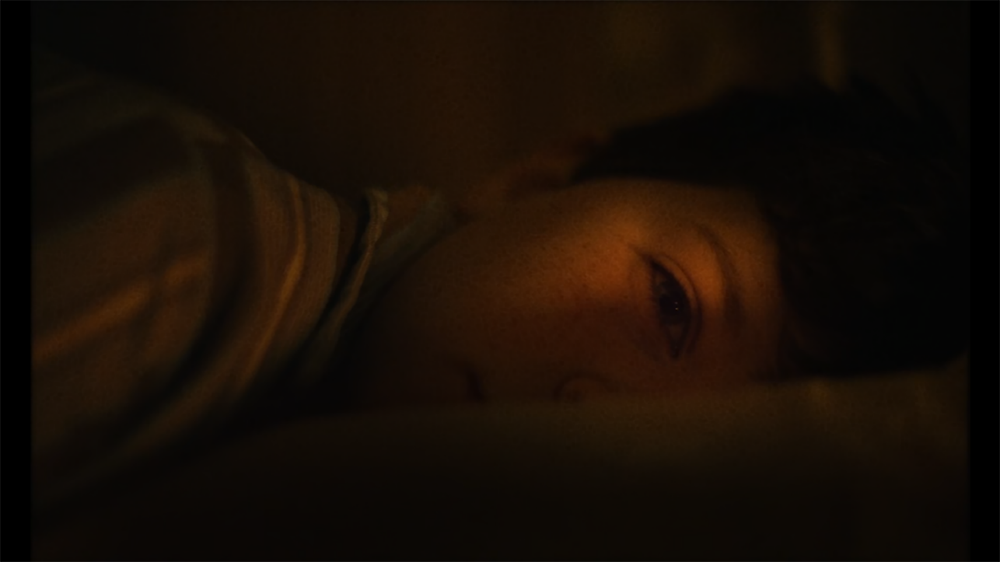
While Scrooge is haunted quite literally by entities that are ghosts, Bill is haunted by ghosts from the past in the figurative sense of the phrase. As discussed in the first part of the analysis, the film underscores the intrusiveness of Bill’s memories by means of flashbacks. He is burdened by his traumatic childhood, the recurring memories of which point to postponed grief. Interestingly, Bill being haunted by his past acquires more tangible forms in the film when he turns in his bed and sees himself as a child staring at him and asking where his father is (see Figure 6). We, of course, understand that this is happening in his head, but the visual depiction of Bill being confronted by his past in the form of himself as a child highlights how much he is burdened by not knowing who his father is.
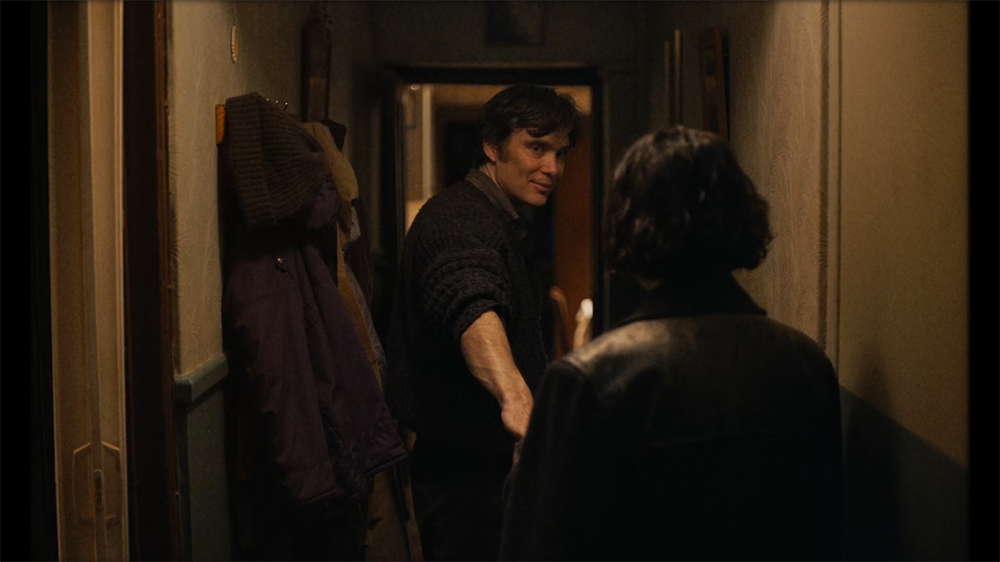
Bill works through postponed grief by facing his past head on and getting answers to the questions that have burdened. The first revelation comes when he visits the house he grew up in with Mrs. Wilson, and a woman immediately understands that he is looking for Ned since they look very similar and must be related. The epiphany that Ned is his father immediately gives him courage, and he rushes to rescue Sarah. Her name becomes highly symbolic since Bill imagines that this could have been his mother being saved by someone earlier. By saving his mother’s namesake, he symbolically confronts his past and, as a result, gets closure. The somewhat altered ending in the film also suggests that Bill has worked through his trauma. The novel ends with Bill and Sarah at a threshold in an intermediate position between inside and outside, signalling the uncertainty that the future holds. The film shows them entering the house: Bill washes his hands, smiles at the girl, takes her hand and enters the living room. Mielants reveals that he included the scene because he wanted Bill to smile (Chilingerian). The smile could be interpreted as an indication that he was able to work through his grief (see Figure 7). The sullenness that characterized Bill throughout the entire film is dispelled. The act of washing hands becomes significant here and makes us reflect on the scene where he tried to clean his hands before, but got overwhelmed by his past, whereas this time he successfully “washes off ” his trauma.
In addition to Dickens’s A Christmas Carol, there are other intertexts that relate to how the film negotiates with Keegan’s story and the historical context. The dimension of paratextuality, namely the “peritexts” (Genette XVIII) surrounding the novel, indicates its engagement with the historical and political context of the Magdalene laundries. Keegan’s novel includes a Dedication, an Epigraph, and “A Note on the text.” The film reproduces the dedication and the note on the text as a single intertitle at the end of the film. In the novel, the epigraph becomes important as a sign of a more overt critique of the Irish government at the time, adding an ironic twist. The epigraph provides an excerpt taken from the Proclamation of the Irish Republic:
The Irish Republic is entitled to, and hereby claims, the allegiance of every Irishman and Irishwoman. The Republic guarantees religious and civil liberty, equal rights and equal opportunities to all its citizens, and declares its resolve to pursue the happiness and prosperity of the whole nation and all of its parts, cherishing all of the children of the nation equally. (qtd. in Keegan)
It is solemnly declared that equal rights and opportunities are guaranteed to all Irishmen and Irishwomen, with special emphasis on the nation’s children. However, the events depicted in novel sharply contrast with the celebratory words of the declaration. The novel explores the distinction between “better” citizens and those who were “fallen” and required reform or isolation from the general population. The young girls and their newborns were separated from one another and later sold to the richest bidders. The paratext, then, is used to generate irony intended as a critique of the Irish government and the founding fathers of the modern nation state. The Irish government was aware of the situation and was collaborating with the Catholic Church (Brangan 396). In light of Bill’s experiences, we are meant to reflect on the hypocrisy inscribed in the declaration.
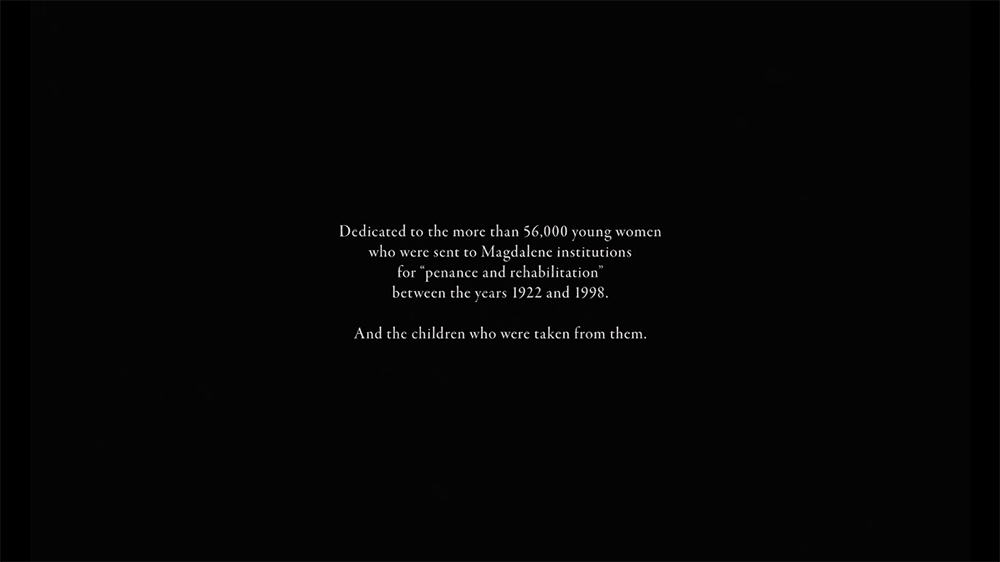
To create a similar sense of irony, the film recreates (with some alterations) Keegan’s “Note on the Text” together with the dedication. The film includes an intertitle at the end that provides similar information, commenting on the scale of abuse women experienced in the Magdalene laundries, particularly how many women suffered (see Figure 8). The paratext contributes to the construction of the bittersweet ending of the film. As mentioned, Bill is shown smiling as he takes Sarah’s hand and leads her to the living room. The following image shows that the last of the Magdalene laundries were closed down as late as 1998, which means that the act of saving Sarah was futile or was only a “small thing.” We can speculate that Bill will suffer the consequences of going against the establishment. Only a single girl was saved, while thousands of them continued to suffer until 1998. The intertitle, then, might be read as generating irony and negating the otherwise happy ending of the film. Bill performs a heroic deed; he rescues the girl, but how many Bills were there in Ireland at the time? Conversely, there might be a more positive spin on the ending. The story revolves around small gestures of kindness that ultimately add up to something significant. Bill can be seen as the one whose small actions eventually contributed to the dismantling of these institutions.
It could be argued that by means of the final intertitle, the film achieves what some other Magdalene laundry themed films failed to do. According to Costello, The Magdalene Sisters and Sinners failed to add anything meaningful to the discourse on the laundries and help the nation deal with its traumatic past: “Neither film suggests the existence of any lasting trauma (…) and instead the viewer is left with a sense of closure and the belief that these tragic events belong to the past ” (44). Small Things is quick to point out the scale of the systematic exploitation young women experienced until as late as 1998 and probably a generation afterwards, negating the potentially happy ending (e.g. Bill saving Sarah). Bill himself experienced trauma only several decades after the initial abuse and Ireland may still feel the consequences of postponed collective trauma. In light of the state still downplaying its involvement and refusing to properly acknowledge the victims of the Magdalene laundries (Sebbane), the film proves particularly important. It can be interpreted as a call for action, promoting the need to continue discussing the horrors of the past and showing that the past is not yet entirely in the past.
Conclusions: from personal memory to national reckoning
Bill’s confrontation with his past functions as a metaphor for Ireland’s persistent struggles with its historical trauma. By showing how his past continues to haunt him in the present, the film suggests that the trauma of the Magdalene laundries is far from resolved. Many people may be indirectly affected by the mechanisms of abuse associated with these institutions, and the trauma can span multiple generations. The fact that the laundries were closed in 1996 does not automatically resolve the underlying issues, and countless women and their children may still feel the lingering impact of their experiences.
The film can also be seen as advocating for action and placing pressure on authorities. By fostering heightened empathetic engagement with Bill’s story, it reshapes our response to the past. While the scale of abuse may previously have been understood only in the abstract, the film’s emotional resonance compels us to reassess history and our relationship with it. In dramatizing injustice and inequality, the film makes these issues more immediate and tangible.
Finally, the film encourages a more critical perspective not only on institutional abuse but also on the societal structures that allowed it to persist. Mielants reverses the structure of A Christmas Carol to cast a critical eye on a society that lacks necessary compassion to confront inequality. The ambivalent ending of the film suggests that there is no simple resolution and that serious action is required to address historical trauma. Bill’s story demonstrates that confronting one’s traumatic past is essential to breaking cycles of abuse. This should serve as a vital reminder to those in power: only by facing the past directly can true progress be made.
Endnotes
1 Philomena Lee recalls her experience in a Magdalene laundry: she was forced to give up her three-year-old son, who was sold to a wealthy American family.
2 Cornwell points out that Keegan’s story can be compared to a fable or a parable, as it contains an overt moral to which readers respond. At the same time, the story contains existentialist undertones: Bill Furlong is burdened by his existence.
3 Butler specifies how, through silence, the citizens of New Ross are implicated in the abuse of the girls in the convent.
4 Following Barthes, McFarlane defines cardinal functions as the main narrative events involved in advancing the plot.
Works Cited
Alber, Jan. “The Representation of Character Interiority in Film: Cinematic Versions of Psychonarration, Free Indirect Discourse and Direct Thought.” Emerging Vectors of Narratology, edited by Per Krogh Hansen, John Pier, Philippe Roussin, and Wolf Schmid, Walter de Gruyter, 2017, pp. 265–283.
Ash, Lamorna. “Small Things Like These by Claire Keegan – Between Happiness and Ruin.” The Guardian, 22 Oct. 2021, https://www.theguardian.com/books/2021/oct/22/small-things-like-these-by-claire-keegan-between-happiness-and-ruin.
Barthes, Roland. S/Z. Blackwell, 2002.
Brangan, Louise. “States of Denial: Magdalene Laundries in Twentieth-Century Ireland.” Punishment & Society, vol. 26, no. 2, 2024, pp. 394–413.
Butler, David. “Small Things Like These by Claire Keegan.” The London Magazine, 3 Dec. 2021, https://thelondonmagazine.org/review-small-things-like-these-by-claire-keegan/.
Caruth, Cathy. “Trauma and Experience: Introduction.” Trauma: Explorations in Memory, edited by Cathy Caruth. The John Hopkins University Press, 1995, pp. 3–12.
---. Unclaimed Experience: Trauma, Narrative, and History. Johns Hopkins University Press, 1996.
Charles, Ron. “‘Small Things Like These’ Reads Like a Christmas Classic.” The Washington Post, 7 Dec. 2021, https://www.washingtonpost.com/entertainment/books/claire-keegan-small-things-like-these/2021/12/07/3509a1be-5762-11ec-929e-95502bf8cdd5_story.html.
Chilingerian, Jillian. “‘Small Things Like These ’ – Interview with Director Tim Mielants.” Offscreen Central, 27 Nov. 2024, https://offscreencentral.com/2024/11/27/small-things-like-these-interview-with-director-tim-mielants/.
Cornwell, Gareth. “Claire Keegan’s Small Things Like These (2021) as an Existentialist Fable.” English Studies in Africa, vol. 68, no. 2, 2025, pp. 52–61.
Costello, Sandra. “Encounters with the Past through Melodrama: Ireland’s Magdalene Laundries on Screen and the Question of ‘Countervisuality.’” Aigne, vol. 10, 2024, pp. 27–46.
Đinh, Thúy. “‘Small Things Like These’ Add Up to a Seismic Change in 1980s Ireland.” NPR, 22 Dec. 2022, https://www.npr.org/2021/12/22/1065780684/claire-keegan-book-small-things-like-these-magdalene-laundries.
Genette, Gérard. Paratexts: Thresholds of Interpretation. Cambridge University Press, 1997.
Grodal, Torben, and Mette Kramer. “Empathy, Film, and the Brain.” Recherches sémiotiques / Semiotic Inquiry, vol. 30, 2010, pp. 19–35.
Hakkıoğlu, Mümin, and Mustafa Güneş. “Making of Scapegoats: The Complicity of Church, State, and Society in Claire Keegan’s Small Things Like These.” Dil Ve Edebiyat Araştırmaları, vol. 28, 2023, pp. 328–345.
Güneş, Mustafa. “Making of Scapegoats: The Complicity of Church, State and Society in Claire Keegan’s Small Things Like These.” Dil Ve Edebiyat Araştırmaları, 2023.
Hutcheon, Linda. A Theory of Adaptation. Routledge, 2006.
Johnson, Russell P. “Christmas Movies and the Religious Dimensions of Story Structure.” Sightings, 2 Dec. 2019, https://divinity.uchicago.edu/sightings/articles/christmas-movies-and-religious-dimensions-story-structure.
Keegan, Claire. Small Things Like These. Faber & Faber, 2021.
McFarlane, Brian. Novel to Film: An Introduction to the Theory of Adaptation. Oxford University Press, 1996.
McKnight, Natalie. “The Men Who Invented Christmas.” The Oxford Handbook of Christmas, edited by Timothy Larsen, Oxford University Press, pp. 397–410.
Merrill, Rob. “Review: ‘Small Things Like These ’ is a Gem of a Slim Novel.” Associated Press, 29 Nov. 2021,
Pérez-Vides, Antonia. “Performing Feminist Empathy in Claire Keegan’s Small Things Like These (2021): From Affective Encounters to (Cruel) Optimism.” European Journal of English Studies, vol. 28, no. 1, 2024, pp. 10–26.
Roxborough, Scott. “Tim Mielants on Making Cillian Murphy’s First Post-‘Oppenheimer ’ Film, ‘Small Things Like These.’” The Hollywood Reporter, 14 Feb. 2024, https://www.hollywoodreporter.com/movies/movie-news/tim-mielants-cillian-murphy-small-things-like-these-berlin-1235821090/.
Sebbane, Nathalie. “The Magdalene Laundries Legacy: Human Rights, Institutional Abuse, and Ireland’s Path towards Transitional Justice.” Études Irlandaises, vol. 50, no. 1, 2025, pp. 59–75.
Shear, M. Katherine, et al. “Complicated Grief and Related Bereavement Issues for DSM-5.” Depression and Anxiety, vol. 28, no. 2, Feb. 2011, pp. 103–117.
Silman, Roberta. “Book Review: Irish Author Claire Keegan Hits Her Stride.” The Arts Fuse, 4 Nov. 2022, https://artsfuse.org/264030/book-review-irish-author-claire-keegan-hits-her-stride/?utm_source=chatgpt.com.
Sixsmith, Martin. “The Catholic Church Sold My Child.” The Guardian, 19 Sept. 2009, https://www.theguardian.com/lifeandstyle/2009/sep/19/catholic-church-sold-child.
Small Things Like These. Directed by Tim Mielants, Ireland, 2024.
Stam, Robert. “Beyond Fidelity: The Dialogics of Adaptation.” Film Adaptation, edited by James Naremore, Rutgers University Press, 2000, pp. 54–76.
Stroebe, Margaret, et al. “Bereavement.” Encyclopedia of Mental Health, vol.1, edited by Harold Friedman, Nancy Adler, and Robert D. Parke, Academic Press, 1998, pp. 235–246.
Sun, Liwei. “The Analysis of Charles Dickens ’ Novel A Christmas Carol: From the Essence of the Novel to Western Culture.” Proceedings of the 2017 International Conference on Social Sciences, Arts and Humanities (SSAH 2017), 2017, pp. 312–315. Web of Proceedings,
Turim, Maureen. Flashbacks in Films: Memory & History. Routledge, 2014.